
What Makes a Contemporary Landscape Painting? Structure, Texture and Control
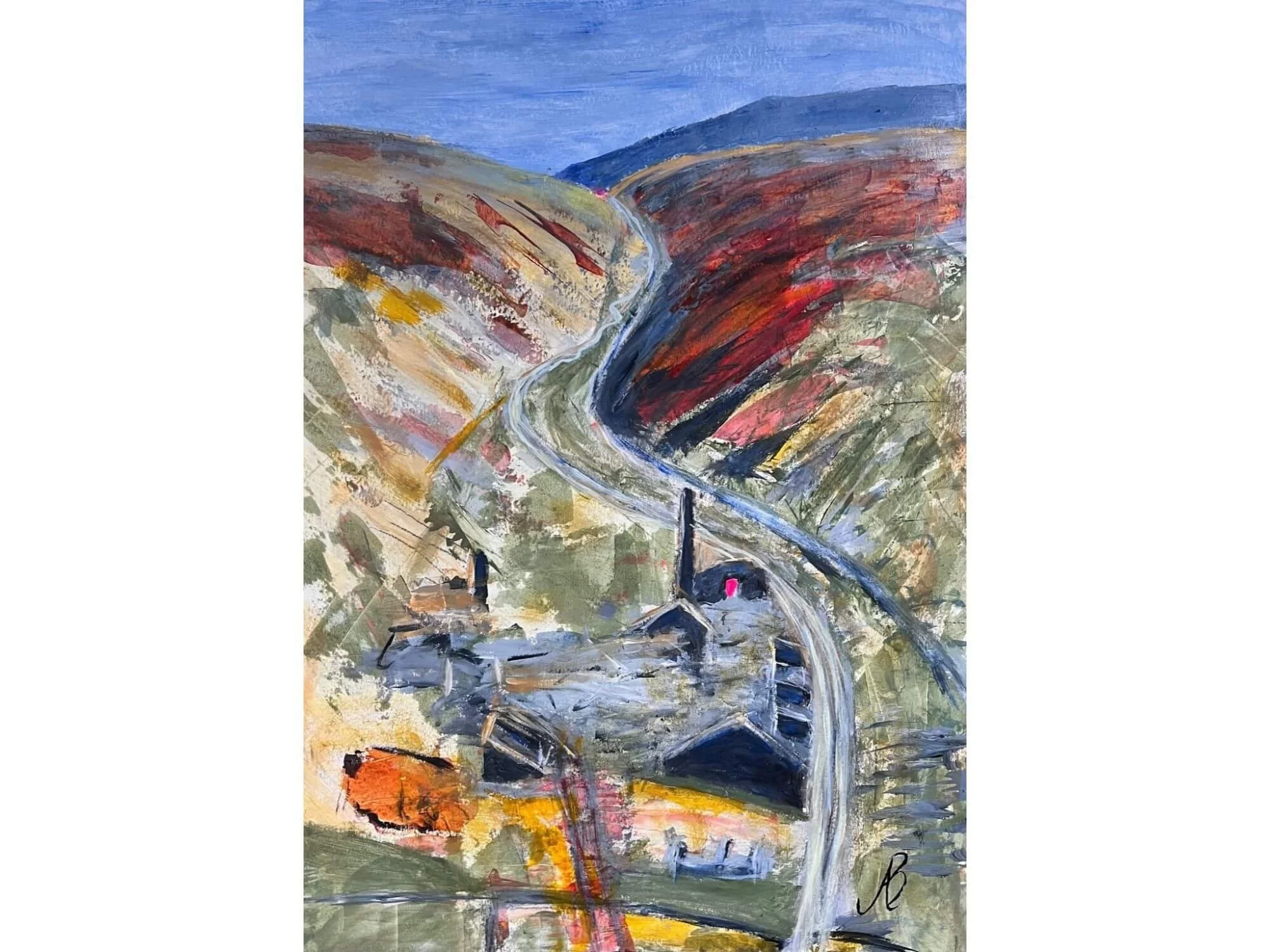
Textured acrylic landscape painting exploring structure, tonal balance, and spatial division.
This article explores how contemporary landscape paintings are created using structure, texture, and controlled composition.
Introduction
Contemporary landscape painting is often misunderstood.
It is not simply a looser or more abstract version of traditional landscape art. Nor is it an attempt to copy nature with less detail.
Instead, contemporary landscape painting is built on structure — the careful organisation of space, tone, and surface — where texture, balance, and restraint replace literal representation.
In my own work, landscape is not something to replicate. It is something to distil.
Learn more about my approach on the About the Artist page https://www.andrewbowersart.com/about-the-artist
Beyond Representation
Traditional landscape painting focuses on describing a place — capturing trees, skies, and perspective with accuracy.
Contemporary landscape painting shifts the focus.
Rather than asking “What does this place look like?”, it asks:
Where does the weight of the composition sit?
How does the eye move across the surface?
What can be removed without losing meaning?
This process leads to paintings that feel grounded and recognisable, even when they are not strictly realistic.
The aim is not to describe everything — but to say just enough.
The Role of Structure
Every strong painting is built on an underlying structure.
In landscape work, this typically comes from:
Horizon placement
Division of land masses
Tonal balance (light vs dark)
Directional movement across the surface
These elements create what I refer to as controlled compositions — where nothing is accidental.
A horizon placed too centrally can weaken a painting.
A foreground without enough tonal weight can make it feel unstable.
Too many competing areas of interest can confuse the eye.
Small structural decisions create significant impact.
When these elements are resolved, the painting begins to feel calm, balanced, and intentional.
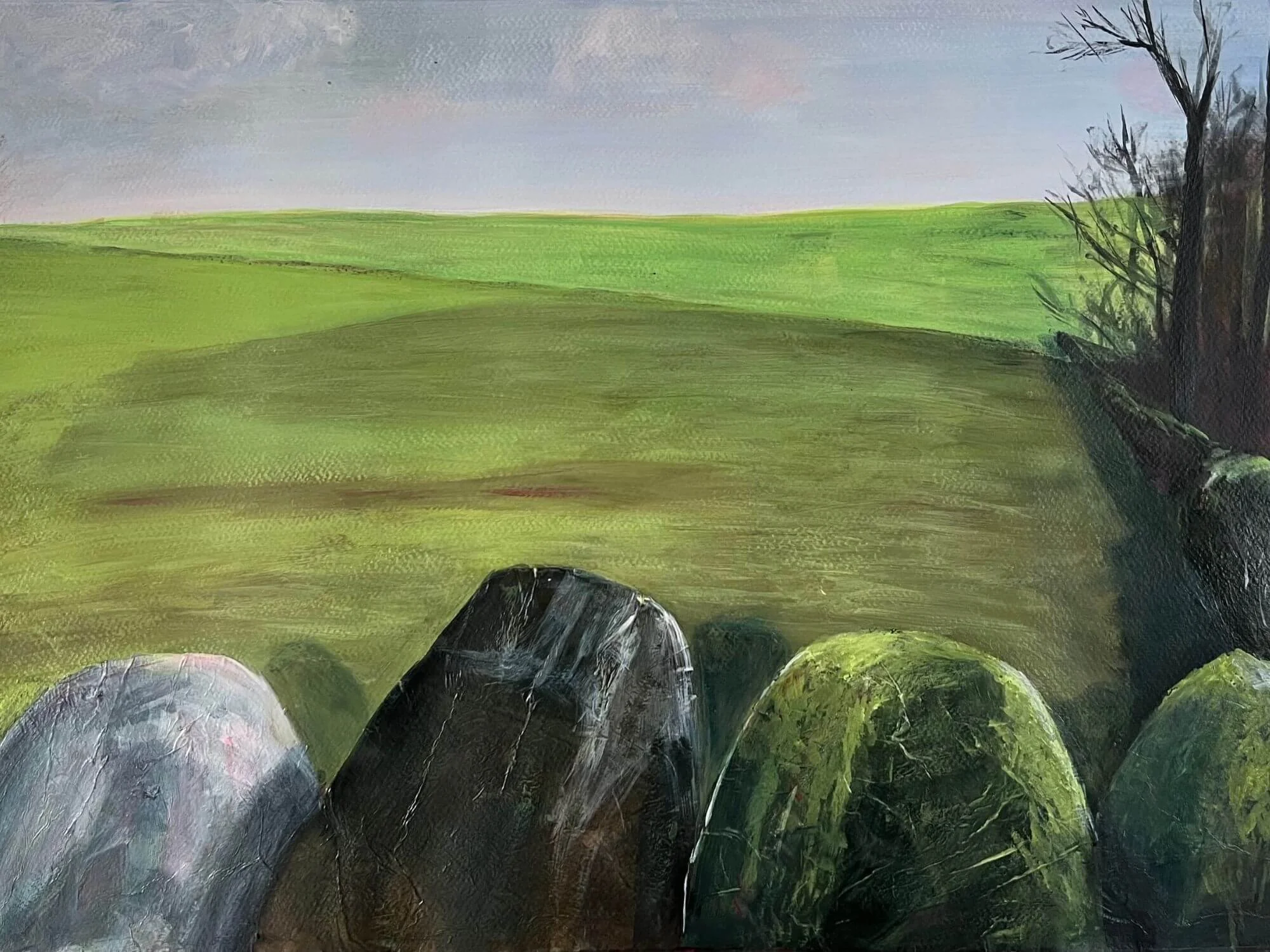
Sentinel Field
Why Texture Matters
Texture is not decoration.
It is a structural tool.
In textured acrylic painting, surface variation helps define:
Depth
Separation between planes
Areas of focus
Visual rhythm
Rough, broken areas can push sections back.
Smoother, more resolved passages can bring elements forward.
Scraped paint, dry brushing, and layered applications create a surface that holds light differently across the painting.
This allows the work to remain visually engaging without relying on fine detail.
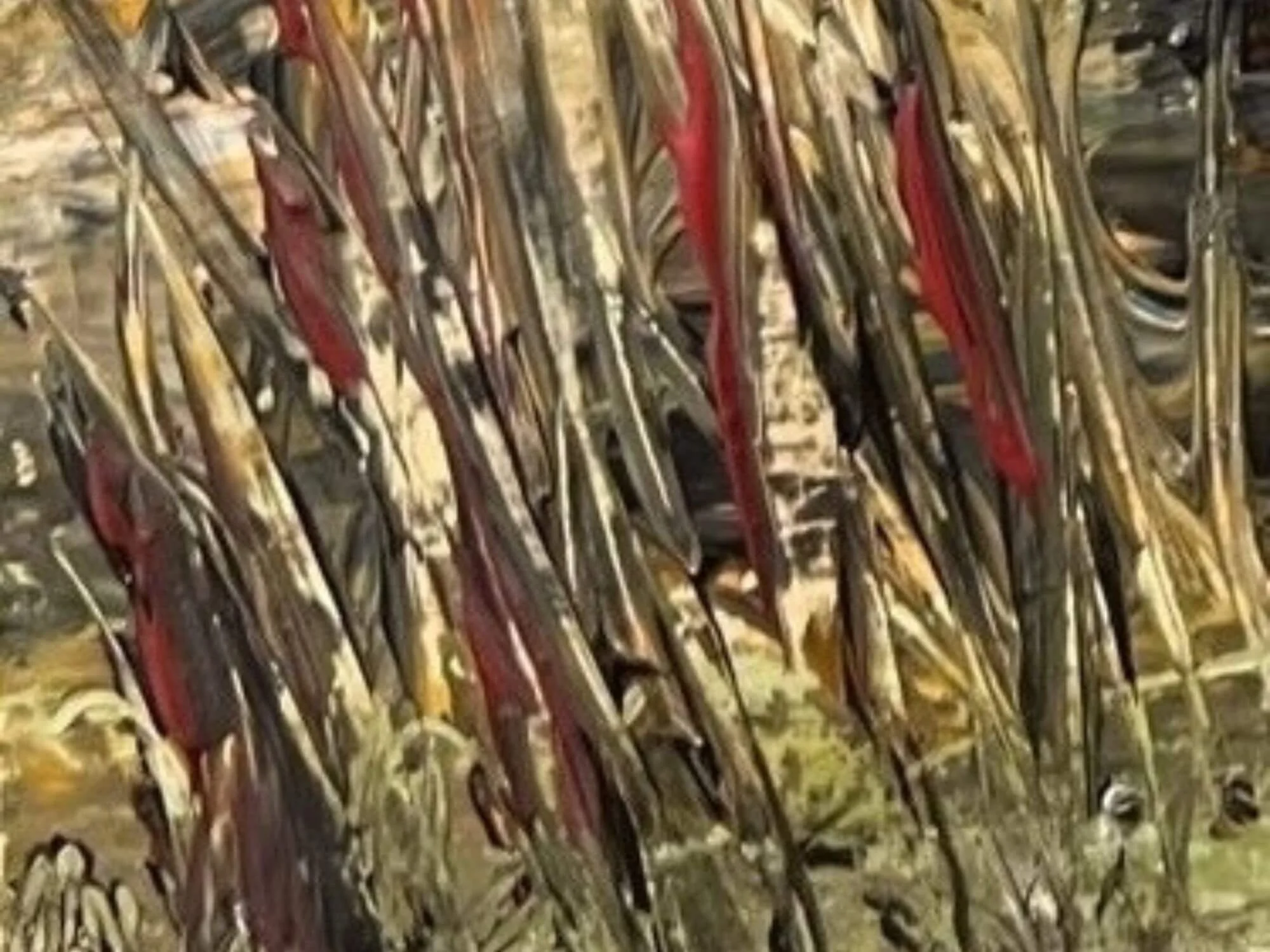
Standing Ground
Limiting the Palette
Many contemporary painters reduce complexity by limiting colour.
In my work, I often use a CMY-based palette:
Cyan
Magenta
Lemon Yellow
Neutrals (Payne’s Grey, Raw Umber, Titanium White)
This creates:
Cleaner colour relationships
Natural harmony across the painting
Greater control over temperature and tone
Instead of reaching for new colours, everything is mixed from a consistent system.
This not only improves cohesion, but also strengthens the overall structure of the painting.
Between Abstraction and Reality
The most effective contemporary landscapes sit between two extremes:
Too realistic → predictable
Too abstract → disconnected
The goal is balance.
A painting should feel like a place — without needing to describe it fully.
Hints of structure, fragments of form, and controlled tonal shifts allow the viewer to engage without being told exactly what they are looking at.
This tension is where the painting becomes interesting.
Common Mistakes in Contemporary Landscape Painting
Many painters moving toward a contemporary style encounter similar problems.
Some of the most common include:
Overworking the Surface
Trying to resolve every area can remove energy and flatten the painting.
Weak Tonal Structure
If light and dark values are too similar, the painting lacks depth and clarity.
Too Many Focal Points
Without clear hierarchy, the viewer’s eye has nowhere to rest.
Overcomplicating Colour
Using too many unrelated colours can break harmony.
Ignoring Edges
Hard edges everywhere can make a painting feel rigid.
Soft, lost, and broken edges create subtlety and movement.
Recognising these issues early is key to developing stronger work.
Step-by-Step: How a Painting Develops
Although each piece evolves differently, the underlying process is consistent.
Establish Structure
A loose layout defines horizon, major shapes, and compositional balance.
Block in Tone
Large areas of light and dark are introduced to anchor the painting.
Introduce Colour
A CMY palette can be used to build relationships across the surface.
Build Texture
Layers are added, removed, scraped, and reworked to create depth.
Refine and Reduce
Unnecessary elements are simplified or removed entirely.
The final painting is often less detailed than earlier stages — but significantly stronger.
Materials and Surface Choices
Materials play a crucial role in contemporary landscape painting.
I primarily work with:
Heavyweight fine art paper
Textured acrylic applications
Occasional collage elements
Paper allows for:
Faster, more intuitive mark-making
Easier layering and removal
A more immediate connection with the surface
Compared to canvas, it supports a looser, more responsive process — which is essential for this style of work.
Quiet Divides Collection
My work is built around a concept I refer to as Quiet Divides - a structured approach to contemporary landscape painting.
Link: 👉 https://www.andrewbowersart.com/quiet-divides
This describes the subtle separations within a landscape:
Land meeting sky
Light meeting shadow
Foreground shifting into distance
These divisions are rarely sharp. This can be seen in works such as Moorland Memory, where subtle tonal shifts define space.
They are softened, broken, and carefully controlled.
This creates a sense of stillness — but also underlying tension.
The painting becomes less about the place itself, and more about how these elements interact.
Further information on materials, techniques, and the approach I use to build textured contemporary landscape paintings can be found here.
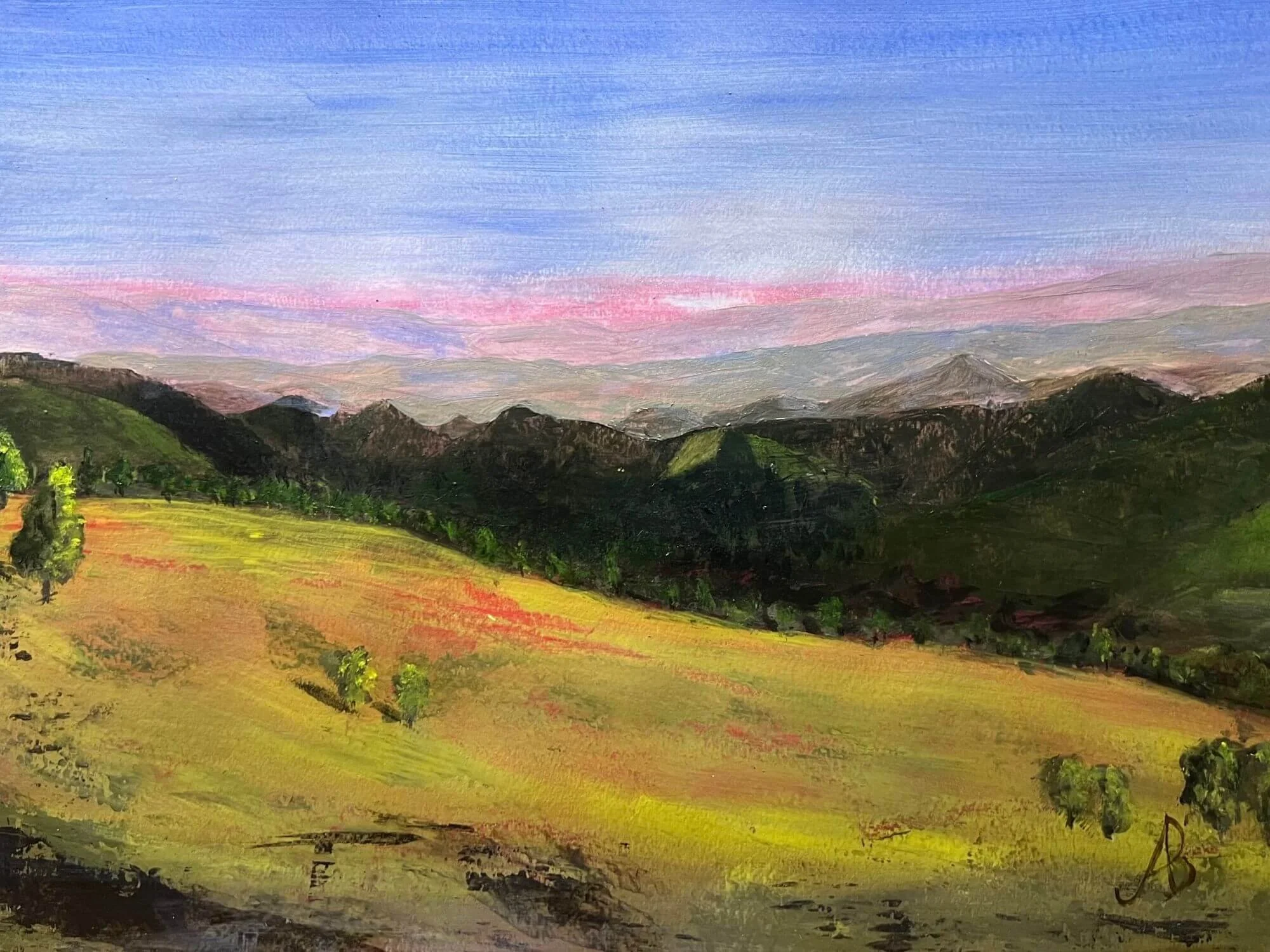
Quiet Divides
Why This Matters to Collectors
Contemporary landscape paintings work particularly well in modern interiors because they:
Avoid visual clutter
Focus on balance and tone
Sit comfortably within a space
They do not demand attention through detail.
Instead, they reveal themselves gradually.
This makes them particularly suited to collectors who value subtlety, atmosphere, and structure.
Frequently Asked Questions
-
A contemporary landscape painting focuses on structure, tone, and composition rather than detailed representation. It simplifies the landscape into essential elements while maintaining a sense of place.
-
Traditional landscape painting aims to accurately depict a scene, while contemporary approaches prioritise abstraction, balance, and surface quality over realism.
-
Textured acrylic paintings are typically created using layered acrylic paint, often combined with scraping, dry brushing, or collage techniques on surfaces such as heavyweight paper or canvas.
-
No. The most effective contemporary landscapes sit between abstraction and reality, suggesting a place without fully describing it.
Conclusion
Contemporary landscape painting is not about simplifying reality.
It is about understanding what matters — and building a composition around it.
Structure, tone, and surface replace detail as the primary language.
The result is work that feels both grounded and open — recognisable, but not literal.
If you’d like to explore this approach further, you can explore available original landscape paintings in the Quiet Divides collection, where these ideas are developed across a series of paintings.