
Textured Acrylic Landscape Painting: Materials, Techniques & Process
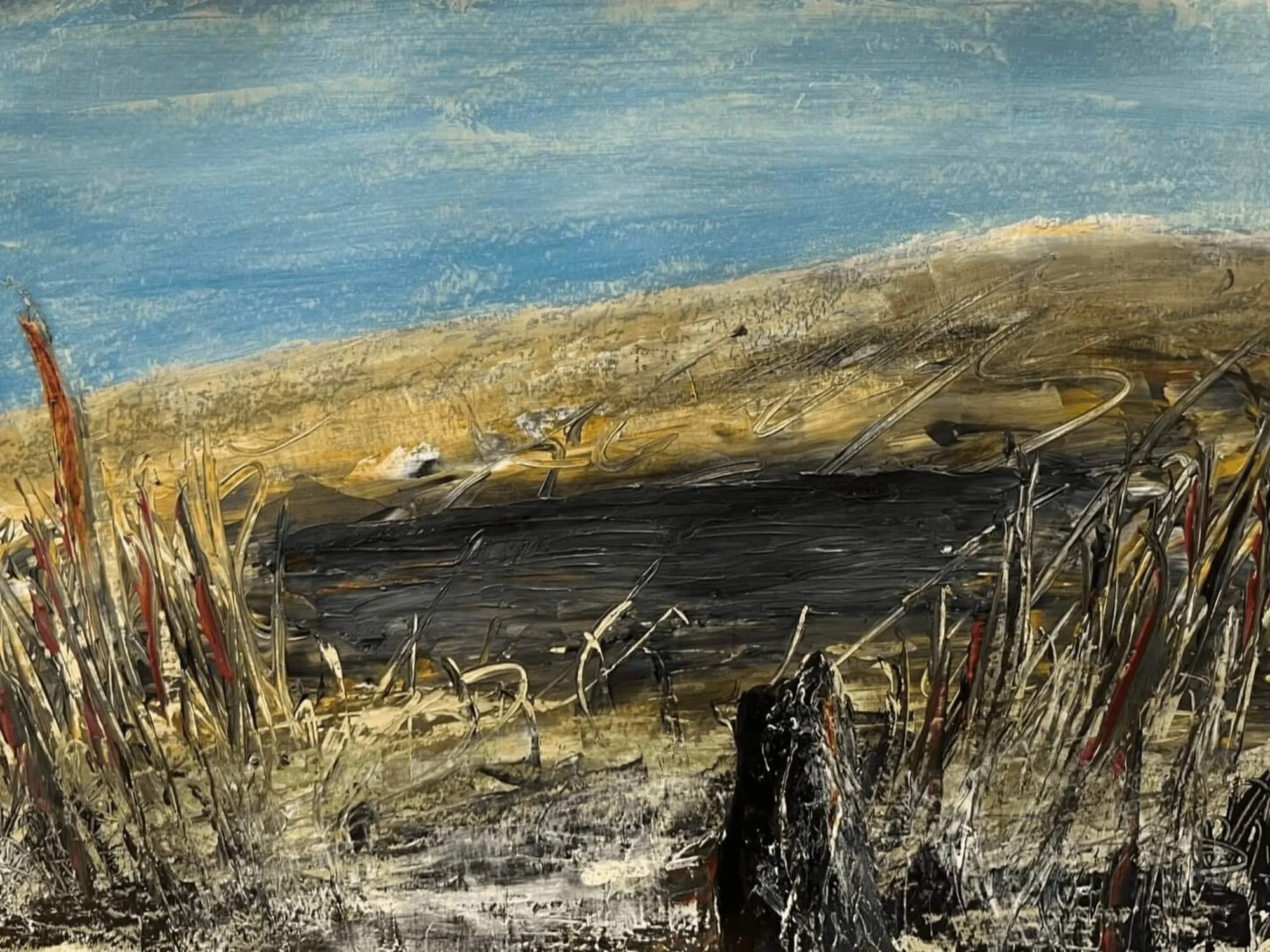
Standing Ground
Textured acrylic landscape painting offers something beyond representation. It introduces surface, depth, and physical presence — allowing the painting to exist not only as an image, but as an object.
My work focuses on structure within landscape: horizon, terrain, and built elements simplified into controlled compositions. Texture plays a central role in this process, helping define spatial tension, break up uniform areas, and guide the viewer’s eye.
In this article, I’ll outline the materials, techniques, and approach I use to build textured contemporary landscape paintings.
Why Texture Matters in Contemporary Landscape Painting
Texture transforms a flat image into something tactile and engaging. In contemporary landscape painting, it can be used to:
Emphasise structure and form
Create contrast between areas of calm and disruption
Introduce rhythm across the surface
Catch light differently depending on viewing angle
Rather than applying texture randomly, it is used intentionally — often aligned with compositional lines such as horizon breaks, pathways, or architectural divisions.
👉 Explore the full framework behind this approach on the Quiet Divides series page:
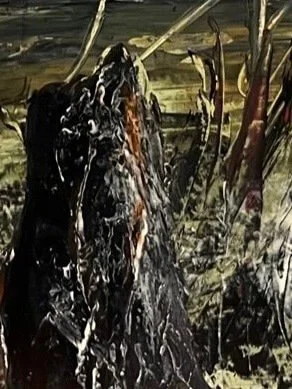
Close up of texture on Standing Ground
Materials for Textured Acrylic Landscape Painting
The materials you choose directly affect the final surface.
Core materials:
Heavy body or fluid acrylic paints
Acrylic mediums (e.g. Powerwax or gel mediums)
Palette knives and scrapers
Heavyweight paper or rigid panels
Brushes for controlled application
In my work, I use a limited palette based on:
Cyan
Magenta
Lemon Yellow
Raw Umber
Payne’s Grey
Titanium White
This allows for strong colour harmony while maintaining flexibility across different lighting conditions.
Building Texture: Techniques and Process
Texture is built gradually through layering rather than applied in a single step.
Establish the structure
Define horizon and major divisions
Block in large tonal areas
Introduce surface variation
Apply medium with palette knife
Scrape back into wet layers
Allow irregular edges and breaks
Develop contrast
Alternate between smooth and textured areas
Keep focal areas more controlled
Refine and edit
Remove unnecessary marks
Reinforce key structural lines
The aim is balance — too much texture creates noise, too little results in a flat surface.
Balancing Texture with Composition
Texture should always serve composition.
In my work, I often:
Keep skies relatively calm
Build texture into land or foreground
Use contrast to guide the viewer
This creates a push-pull effect between areas of rest and areas of activity.
The result is a painting that feels structured rather than chaotic.
From Process to Finished Painting
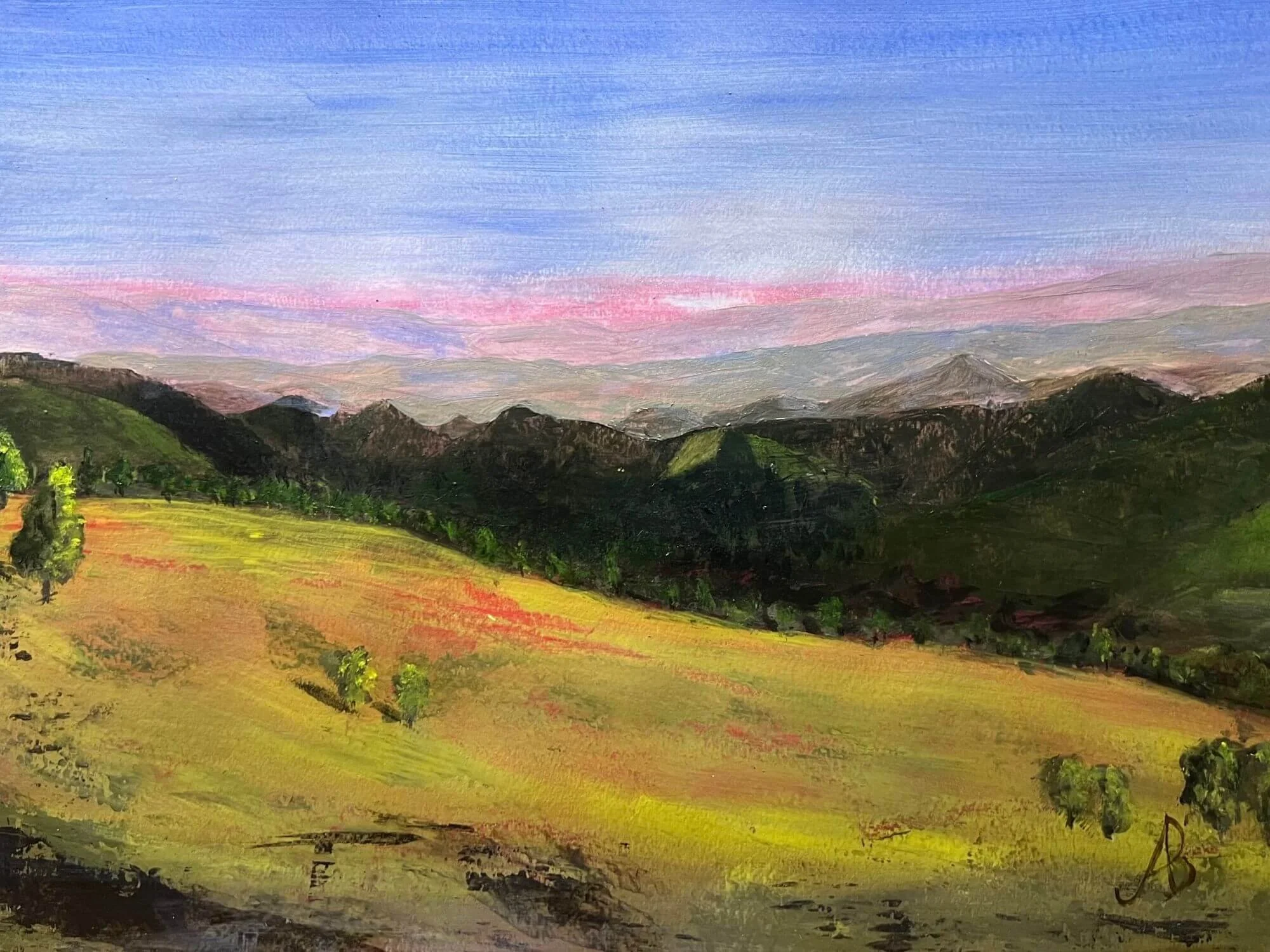
A finished textured painting should feel resolved both visually and physically.
This means:
No accidental marks
Clear compositional hierarchy
Controlled use of colour and texture
You can view examples of finished works here:
Final Thoughts
Textured acrylic landscape painting is not about adding surface for its own sake. It is about reinforcing structure, enhancing depth, and creating a more engaging visual experience.
By controlling where and how texture is used, a painting can move beyond representation and become something more physical, more intentional, and more immersive.
Further reading on “What Makes a Contemporary Landscape Painting” can be found here.
Frequently Asked Questions About Textured Acrylic Landscape Painting
-
Texture in acrylic landscape painting is created by layering paint with mediums such as gel or wax, often applied using palette knives, scrapers, or stiff brushes. The process typically involves building up and removing layers to create variation across the surface.
Rather than applying texture randomly, it is best used selectively to reinforce composition — for example, along horizon lines, pathways, or structural divisions within the landscape.
-
The most effective materials include:
Heavy body or fluid acrylic paints
Acrylic gel mediums or wax-based mediums
Palette knives and scraping tools
Heavyweight paper or rigid panels
Using a stable surface such as thick paper or board helps support heavier applications of paint and prevents warping.
-
Yes, fluid acrylics can be used to build texture when combined with mediums. On their own, they are more suited to washes and layering, but when mixed with gels or applied in multiple layers, they can contribute to a textured surface.
They are particularly useful for creating contrast between smooth and textured areas within a painting.
-
Control is key. Texture should always follow the structure of the composition.
To avoid a messy result:
Limit texture to specific areas
Maintain clear focal points
Balance textured and smooth sections
Edit back unnecessary marks
A successful painting will feel intentional, not overloaded.
-
Yes, when created using professional acrylic materials and applied to stable surfaces, textured acrylic paintings are highly durable. Acrylic paint is flexible and resistant to cracking, making it suitable for layered and textured work.
Proper sealing and framing will further protect the surface.
👉 View available original paintings: