
How to Choose a Painting for Your Home: Style Size and Placement Guide
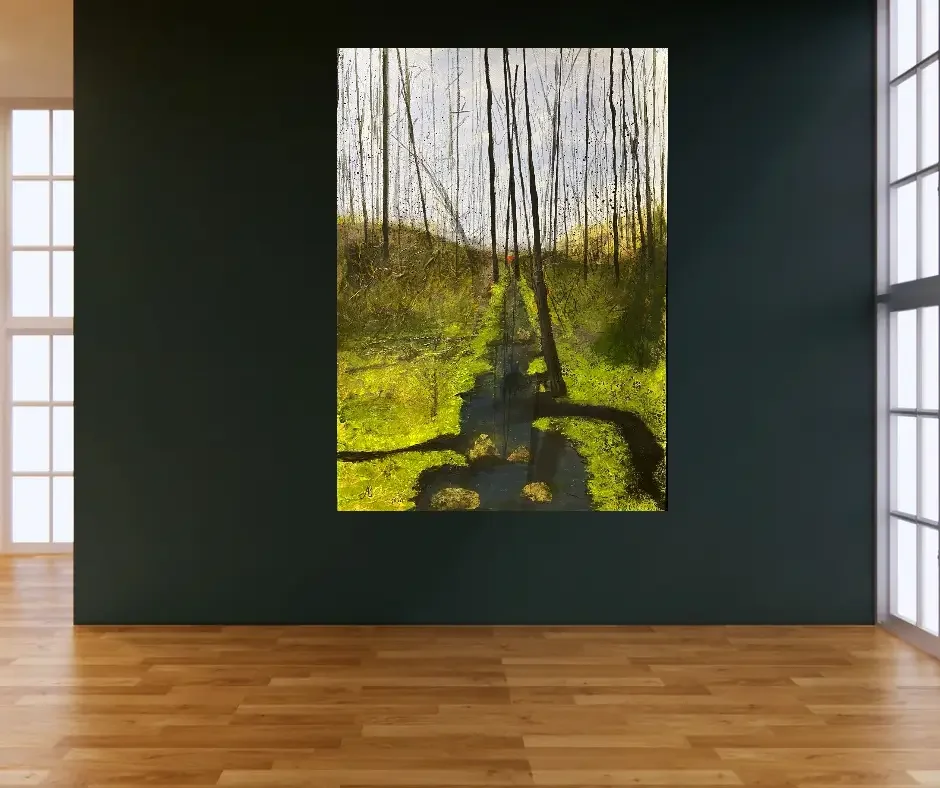
Where Water Narrows painting by landscape artist Andrew Bowers in a gallery setting
Introduction
Knowing how to choose a painting for your home is less about finding something that simply looks good, and more about selecting a piece that works within the structure of a space.
A well-chosen painting can define a room, create balance, and introduce atmosphere in a way that feels intentional rather than decorative. The key is to consider how artwork interacts with scale, light, colour, and placement — not just how it appears on its own.
This guide explains how to choose a painting for your home with clarity, covering style, size, placement, and the factors that influence how a painting sits within an interior.
How to Choose a Painting for Your Home
1. Define Your Aesthetic
Start by identifying the overall feel of your space.
Minimal interiors often benefit from restrained, structured work
More expressive interiors can accommodate looser, more gestural paintings
You don’t need to match your existing décor exactly, but the painting should feel consistent with the overall direction of the room.
2. Consider the Room’s Role
Different rooms call for different types of artwork.
Living rooms often benefit from a strong focal piece
Bedrooms may suit calmer, more tonal work
Hallways can accommodate smaller or more transitional pieces
Think about whether you want the painting to energise the space or create a sense of calm.
3. Build a Colour Story
Colour should support the space rather than compete with it.
Choose tones that complement or subtly contrast existing colours
Avoid trying to match colours exactly
Consider how the painting will look in different lighting conditions
A well-chosen painting often introduces a colour that ties the room together.
4. Choose the Right Scale
Scale is one of the most important aspects of choosing a painting — and one of the most commonly overlooked.
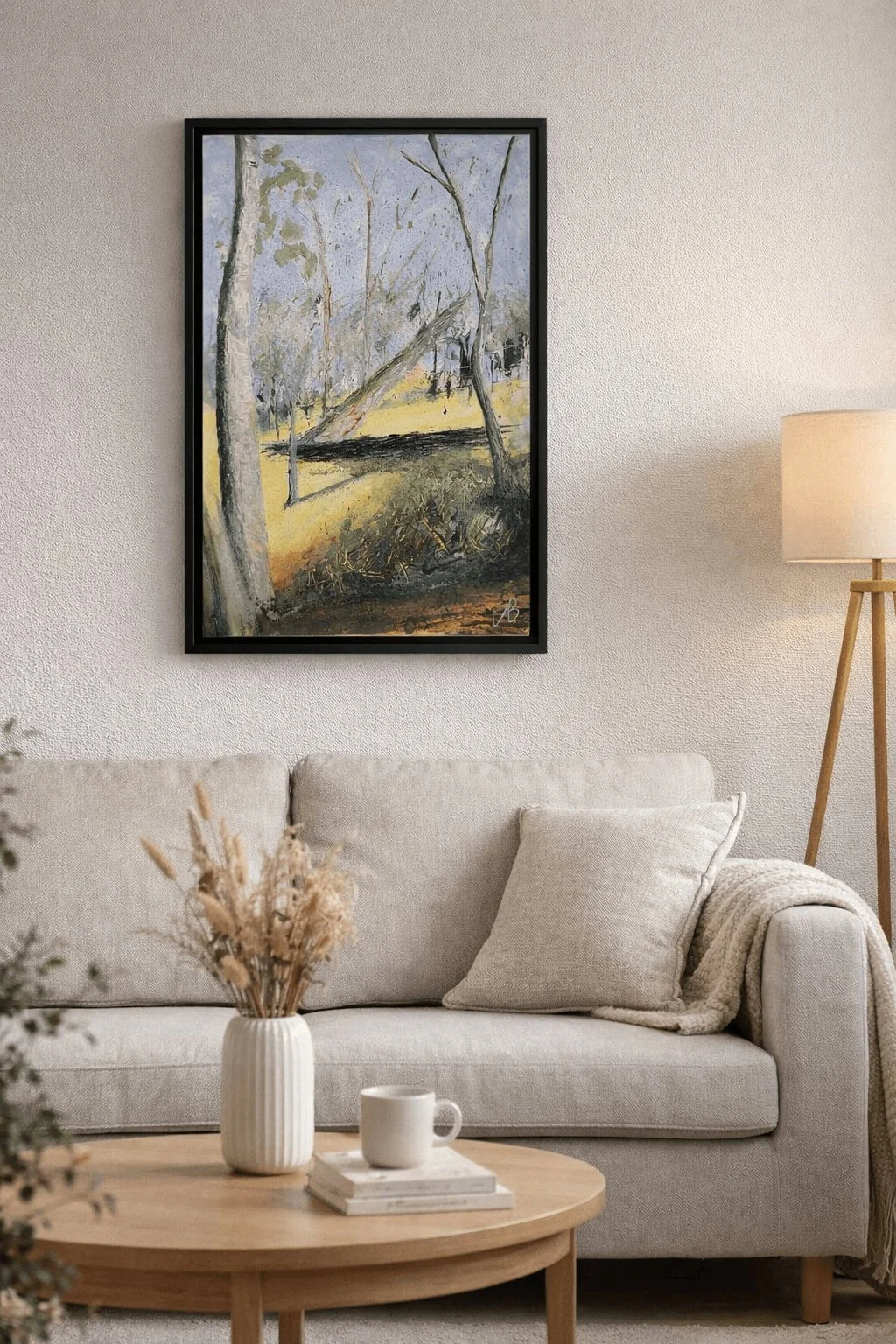
A painting should typically be 60–75% of the width of the furniture beneath it
Large walls generally require larger works to feel balanced
A single large painting often creates more impact than several smaller pieces
Choosing the correct size ensures the painting feels integrated into the space rather than isolated.
5. Create an Emotional Connection
Beyond practical considerations, a painting should resonate with you.
This doesn’t mean it has to be dramatic or bold — but it should feel like something you want to live with over time.
A strong connection often comes from:
composition
atmosphere
subtle detail
This is where artwork moves beyond decoration and becomes part of the space.
Where to Place a Painting in Your Home
Hanging at Eye Level
As a general rule, the centre of a painting should sit at eye level — typically around 145–150 cm from the floor. This ensures the work feels naturally positioned within the room.
Positioning Above Furniture
When placing artwork above a sofa, bed, or console:
Keep the painting visually connected to the furniture
Leave a consistent gap (usually 15–25 cm)
Ensure the width relates proportionally to the furniture below
This helps anchor the painting within the overall layout.
Matching Wall Proportions
Consider the shape of both the wall and the artwork.
Wide walls often suit landscape-oriented paintings
Taller, narrower spaces may benefit from portrait formats
The relationship between wall and artwork should feel balanced and intentional.
How Lighting Affects a Painting
Natural Light and Shadow
Natural light can enhance texture and depth, particularly in paintings with layered surfaces. However, direct sunlight should be avoided as it may cause fading over time.
Artificial Lighting Choices
Spotlights or directional lighting can be used to highlight a painting, but should be positioned carefully to avoid glare.
Soft, even lighting tends to work best for most interiors.
Warm vs Cool Colour Temperature
The colour temperature of lighting will influence how a painting appears.
Warm light enhances reds, yellows, and earth tones
Cool light emphasises blues and greys
Testing a painting in different lighting conditions can help ensure it works throughout the day.
Beyond the Canvas: What Makes a Painting Valuable
The Artist’s Process and Story
Understanding how a painting is made can add depth to the experience of owning it. Process, materials, and approach all contribute to the character of the work.
The Role of Texture and Materials
Texture plays a significant role in how a painting interacts with light and space.
If you’re interested in this aspect, you may find it helpful to explore texture acrylic painting techniques and how they influence depth and surface quality.
Composition and Structure
A well-composed painting holds together visually, even over time. Structure — the relationship between elements within the painting — is often what makes a piece feel balanced and complete.
How to Mix Different Art Styles in One Space
Finding a Common Thread
Different styles can work together if they share something in common, such as:
colour palette
tone
subject matter
Creating a Balanced Gallery Wall
A gallery wall can be effective if spacing, alignment, and scale are handled carefully. Avoid overcrowding and allow each piece to have room to breathe.
Using Contrast Without Clutter
Contrast can bring energy to a space, but it needs to be controlled. Too many competing elements can reduce the impact of each piece.
Choosing Art Based on Budget
Emerging Artists
Buying from emerging artists can offer original work at a more accessible price point, while also supporting developing practices.
Limited Edition Prints
Prints provide a more affordable way to introduce artwork into a space, particularly when working with larger areas.
Investing in Original Paintings
Original paintings offer:
uniqueness
physical presence
depth through texture and layering
For a focal piece, an original painting often creates the strongest impact.
Explore Original Paintings for Your Home
If you are considering an original piece, you can explore my collection of contemporary textured landscape paintings. Each work is developed through a structured approach, where composition, tone, and texture are carefully balanced to sit naturally within an interior space.
Explore my artwork here
Conclusion
Learning how to choose a painting for your home is ultimately about understanding how artwork interacts with a space.
By considering scale, placement, colour, and structure, you can select a painting that enhances the room rather than simply filling a wall.
The result is a space that feels more complete, more considered, and more personal.
Frequently Asked Questions
-
A painting should typically be around 60–75% of the width of the furniture it sits above.
-
Not exactly. It should complement or contrast with the space rather than match it precisely.
-
Often, yes. A single large painting creates a stronger focal point, although smaller works can be effective when arranged carefully.
-
The centre of the painting should usually sit at eye level, around 145–150 cm from the floor.