
Andrew Bowers — Contemporary British Artist in Yorkshire
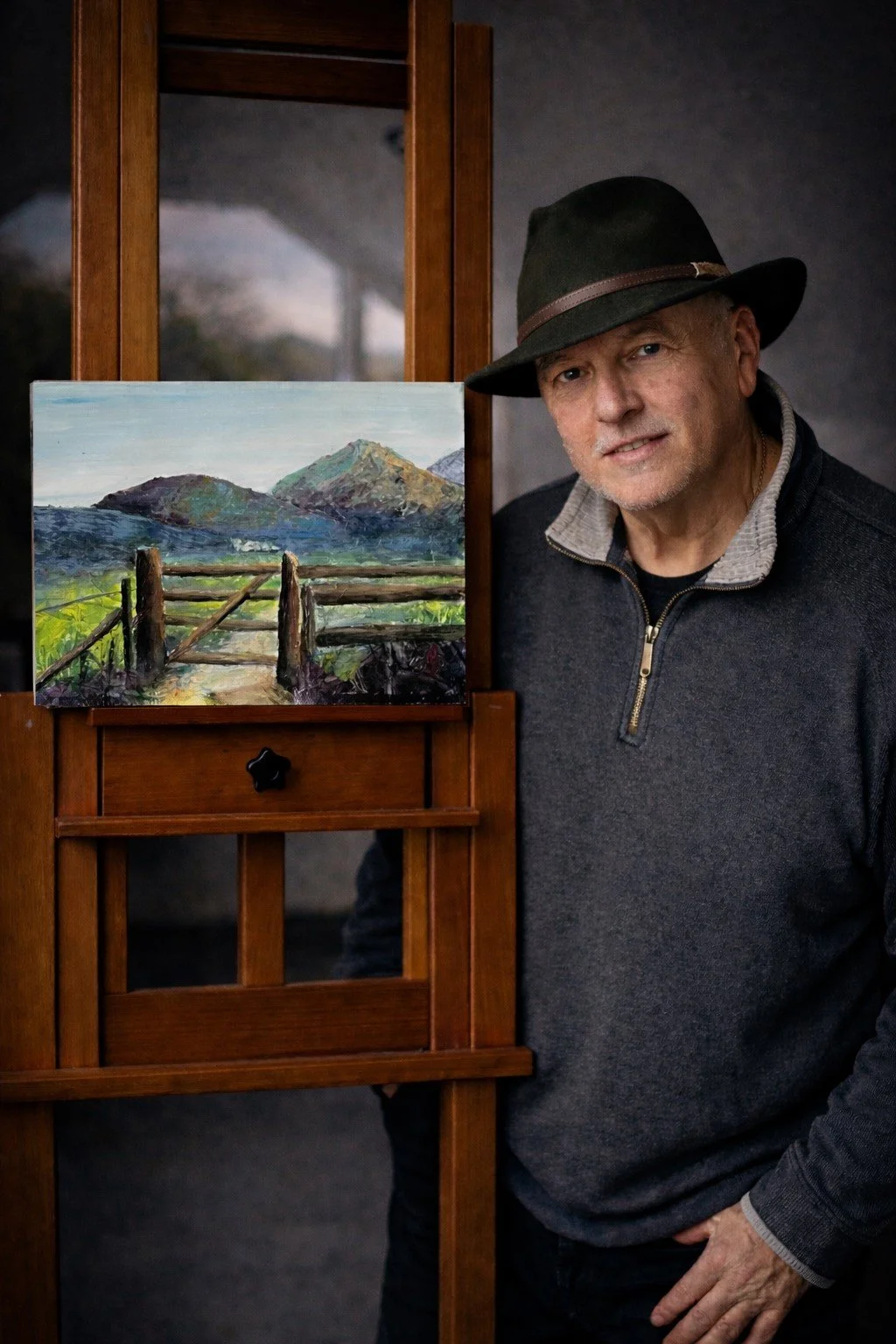
Andrew Bowers is a contemporary British artist based in Yorkshire. Working primarily in acrylic and mixed media, his practice moves between landscape, abstraction and portraiture, combining structured composition with expressive colour, layered surfaces and visible mark-making.
Landscape remains at the centre of his established work. His ongoing Quiet Divides series explores the paths, walls, waterways, tree lines and bands of light that divide and organise a place. Rather than reproducing a view literally, Andrew simplifies and reconstructs what he has observed, allowing memory, atmosphere and the physical process of painting to shape the finished work.
👉 Explore the Quiet Divides series of contemporary abstract landscape paintings:
A Practice Shaped by Place
Andrew’s relationship with landscape has been shaped by the contrasting environments of Northern England and Southern Europe. After living for several years in Spain and travelling extensively along the Camino routes, he became increasingly attentive to open space, changing light and the way roads, paths and built structures lead the eye through a landscape.
Back in Yorkshire, those experiences met a very different terrain: moorland, stone walls, rivers, woodland and the remains of industry. These are places in which natural and human structures overlap. A wall may divide a field but also guide a journey; a stream may interrupt the land while drawing the viewer deeper into it. Such observations became central to Quiet Divides.
The paintings are rooted in real locations and personal encounters, but they are not intended as straightforward records. Andrew is more interested in what remains after a place has been experienced: its underlying structure, shifts of light, fragments of colour and the particular mood carried in memory.
From Observation to Abstraction
Across landscape, portraiture and abstract work, Andrew returns to the point at which a recognisable subject begins to move towards abstraction. He looks for the major shapes and tonal relationships that hold an image together, then introduces layers, interruptions and less predictable marks.
This balance between structure and discovery is important. A painting may begin with a clear compositional plan, but it develops through addition, partial removal, glazing, scraping, collage and the concealment or reappearance of earlier layers. Controlled decisions sit alongside accidents that cannot be repeated exactly.
The result is work that retains a connection to its subject without being confined by it.
Training and Artistic Development
Andrew’s first sustained formal acrylic training was with Nina Hunter at Saltaire Art Gallery & School, where he completed two six-week, in-person acrylic painting courses in 2025. This provided an important foundation for the development of his painting practice and began a period of concentrated study and experimentation.
He has since undertaken courses and workshops across landscape, abstraction, portraiture, drawing, collage and surface development. A three-day landscape painting retreat with Andrew Kinmont in the Yorkshire Dales had a particularly strong influence on his understanding of composition, tonal structure, colour harmony and focal emphasis.
Further study with David Mankin, Lewis Noble, Gabriel Lipper and Robert Dutton developed different aspects of his approach to landscape and abstraction—from memory, mark-making and creative risk to the transformation of observed places in the studio. Courses with Kasia Clarke, Marina Teding van Berkhout and Rosso Emerald Crimson, together with regular portrait and life-drawing practice, have informed his use of glazing, collage, layered surfaces and the relationship between representation and abstraction.
These influences do not form a formula. They have given Andrew a broader vocabulary from which to make his own decisions, while the work continues to evolve through sustained studio practice.
Materials and Process
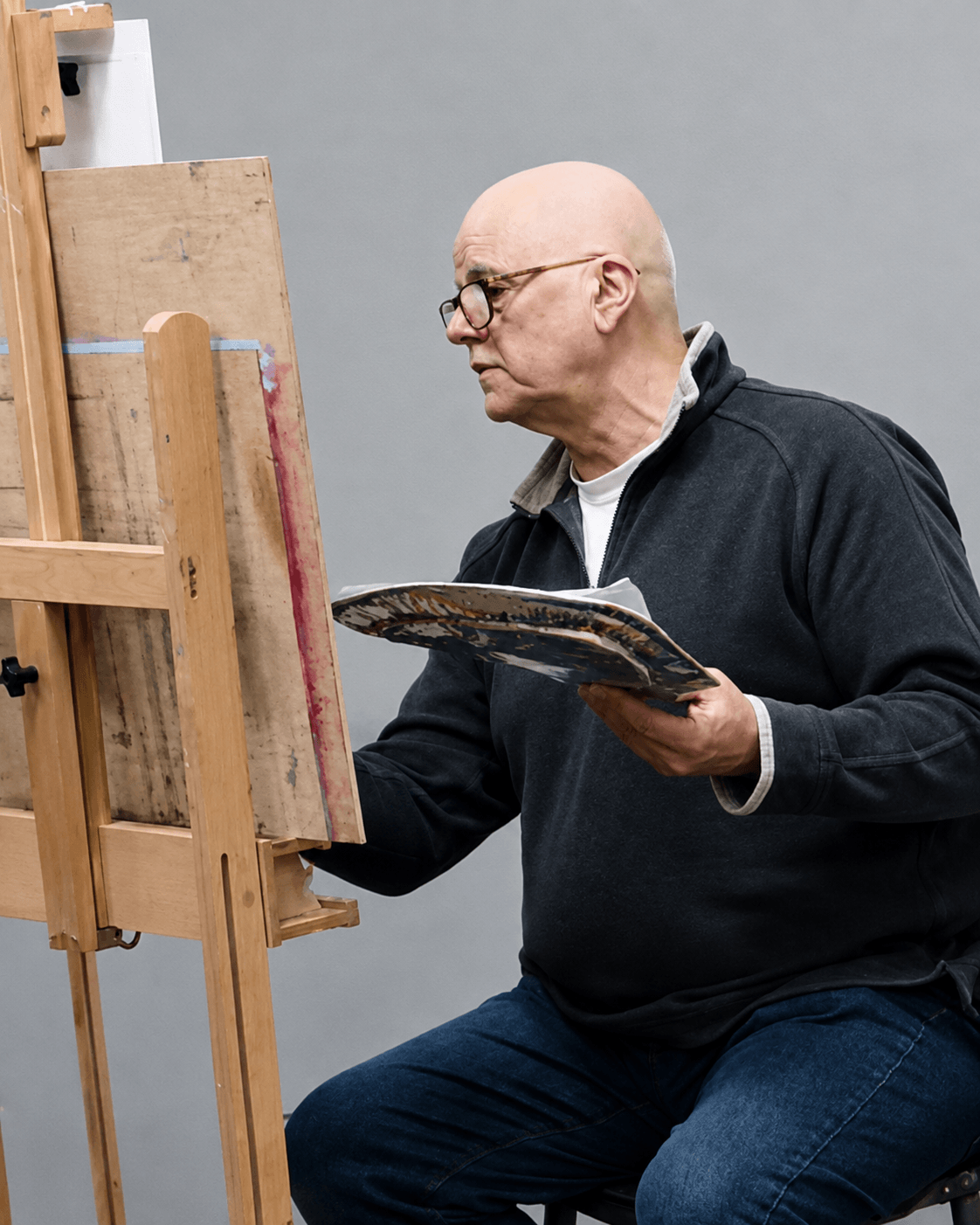
Andrew works primarily with acrylic on heavyweight fine art paper and panel. Depending on the painting, the process may also involve acrylic ink, graphite, pastel, collage papers, wet-strength tissue, glazing and texture mediums.
Composition and tone usually provide the starting structure. From there, colour is developed through layered applications, with earlier passages allowed to remain visible. Paint may be washed back, scraped, covered or reintroduced until the image reaches a balance between clarity and ambiguity.
Presentation is treated as part of the artwork rather than an afterthought. Works on paper may be mounted to a rigid panel and presented in carefully selected floating or tray frames. Andrew is also developing more highly finished panel-mounted surfaces as part of his continuing material research, although this remains an evolving area of the practice.
The Quiet Divides Series
Quiet Divides is Andrew’s principal landscape series. It brings together paintings inspired by Yorkshire and other personally encountered landscapes, including woodland near Telšiai in Lithuania.
The series considers the understated features that shape how a landscape is seen and crossed: paths, gateways, walls, waterways, rocks, boundaries and distant light. These divisions may be physical, atmospheric or remembered. They separate one area from another, but they also create movement, direction and connection.
Works including Witness Stones, Through the Gate, Standing Ground, Moorland Memory, Where Water Narrows, Sentinel Passage and Sentinel Field develop this idea through varied locations and compositions. Six works from the series were selected and exhibited by the Manchester Academy of Fine Arts in 2026.
👉 View available paintings:
A Developing Practice
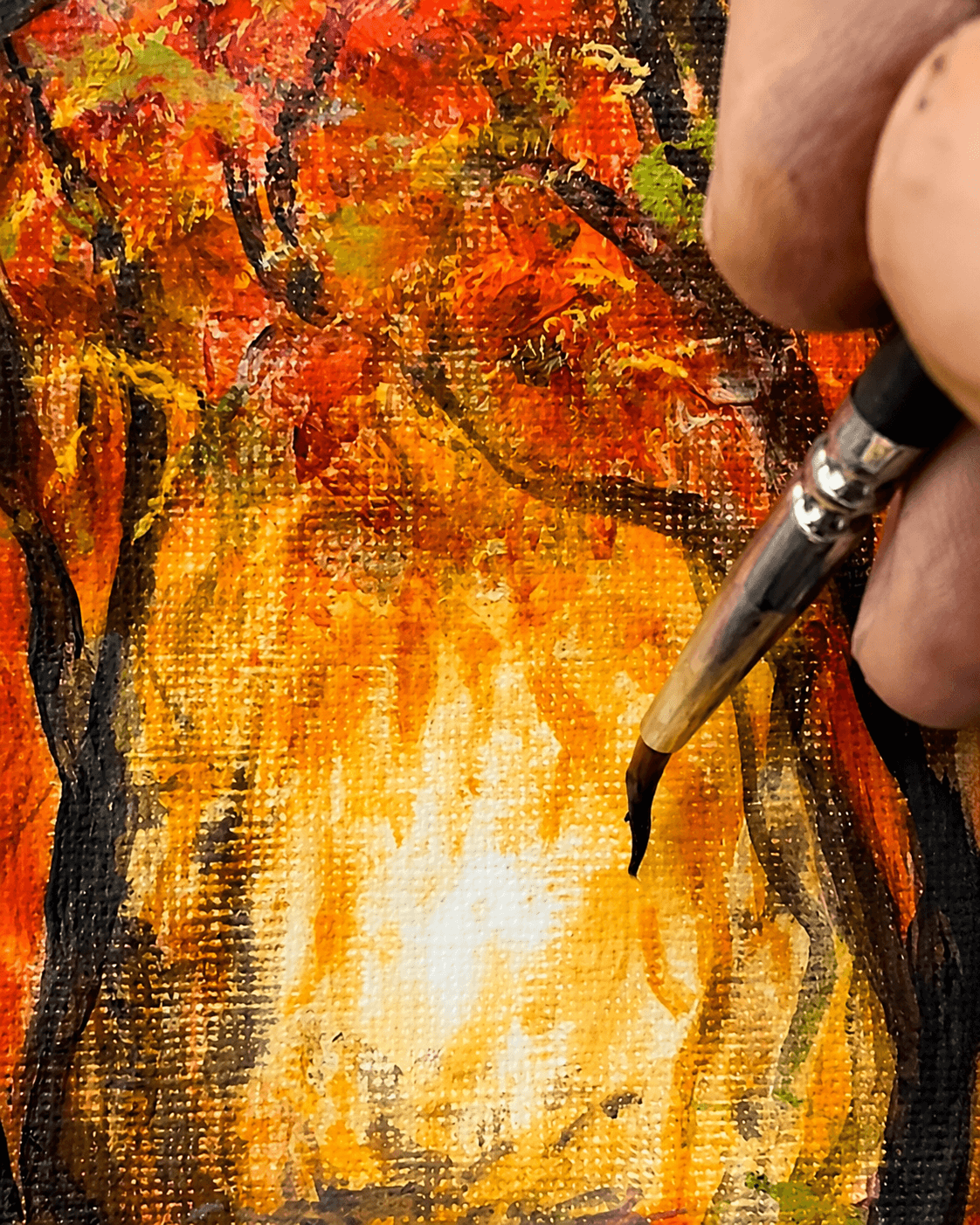
Alongside Quiet Divides, Andrew continues to develop colourful Yorkshire landscapes, square-format portraits and abstract mixed-media studies. These strands allow different subjects and colour relationships to be explored while retaining common concerns: strong composition, layered surfaces, expressive marks and the movement between observation and abstraction.
The abstract studies often operate as a testing ground for indirect marks, glazing, collage and chance effects. Ideas developed there frequently return in the landscapes and portraits. The aim is not to impose one visual treatment on every subject, but to build a recognisable practice through the way each painting is constructed and resolved.
Exhibitions and Collections
In 2026, six paintings from Quiet Divides were selected and exhibited by the Manchester Academy of Fine Arts. Andrew’s work also progressed to the final 25% stage of Jackson’s Art Prize.
His paintings are held in private collections and original works are available through the website and his verified Vault Canvas profile. Each available artwork has its own professional record, with details of materials, presentation, provenance and authenticity.
Explore the Work
Explore available original paintings, discover the Quiet Divides series, or visit the Journal for articles about Andrew’s process, materials and approach to contemporary painting.
For availability, commissions or collector enquiries, please use the contact page or email andrewbowersart@gmail.com.